01 — OVERVIEW
A reporting tool that actually triggers removal.
Today, drivers in Texas can report road debris through Waze, Google Maps, or Apple Maps — but those reports only warn other drivers. They don't trigger removal.
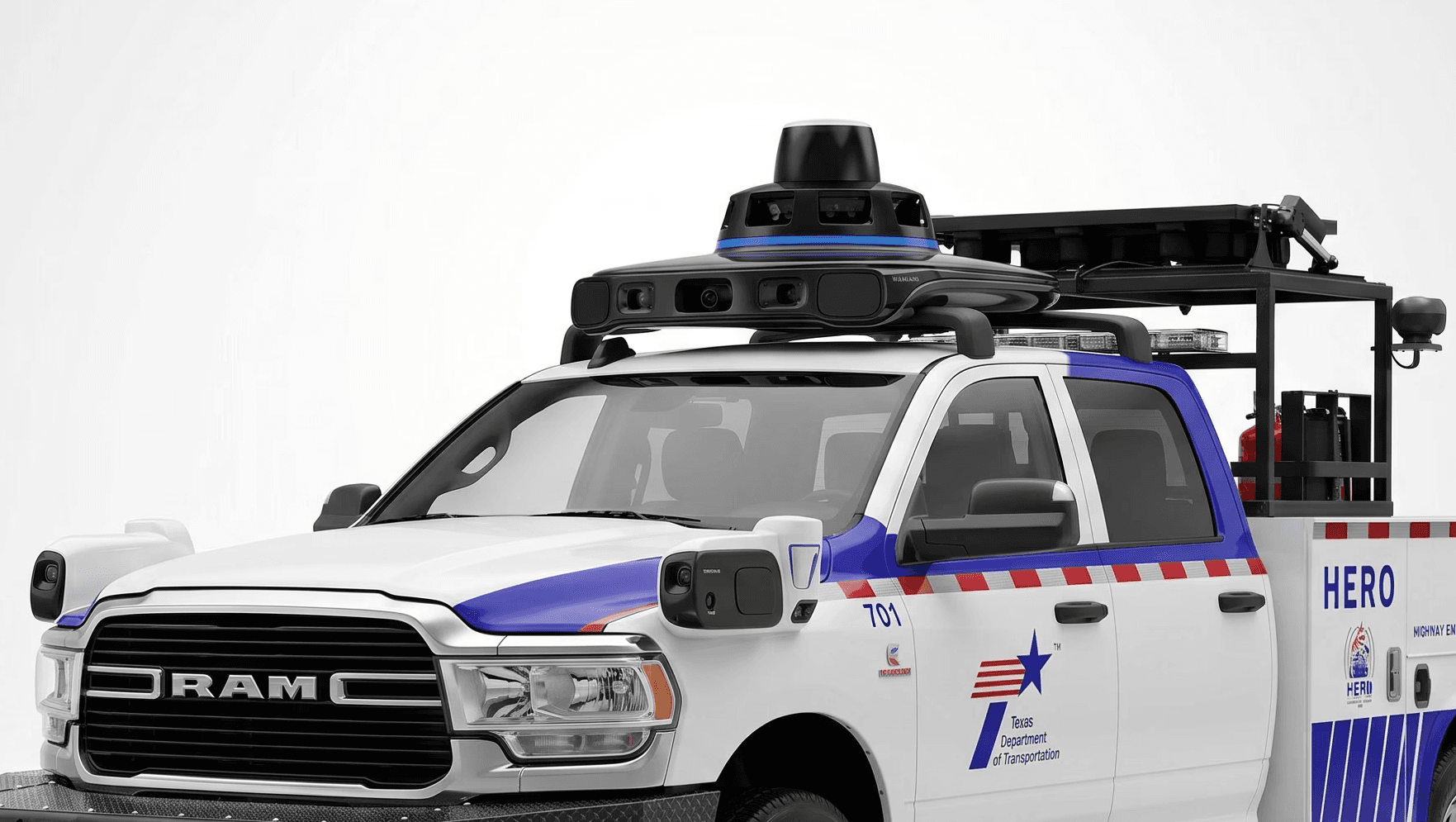
Road Gators is the service that closes that loop. The same APIs that intake reports also push warnings out when a H.E.R.O. crew is actively clearing debris. The dispatched H.E.R.O. operates a JAWS-equipped truck that does the dangerous part mechanically while staying inside the cab. And when removal is done, the driver who reported sees proof — a 30-second clip of the operation, delivered into the same nav app they reported from.
Designed in two phases: a Phase 1 MVP that ships the reporting and dispatch system in full, and a Phase 2 that documents the autonomous extension as both a near-term ATMA-shield approach and a long-term fully-autonomous version. The case study draws on a 106-respondent driver survey, an interview with a H.E.R.O. operator, and the IBM Enterprise Design Thinking framework.
Deliverables:
Design Research
Service Blueprint
Concept Visualization
Product Strategy
Interaction Design
Case Study
Service Design
UX Design
Design System Extension
2024
02 — THE PROBLEM
Road debris doesn't make headlines. It kills people.
Every year, drivers across America swerve to avoid couches, ladders, mufflers, and shredded truck tires that shouldn't be on the road. Sometimes they don't make it.
Between 2018 and 2023, road debris was a factor in 319,724 crashes, 32,802 injuries, and 433 deaths nationwide — averaging roughly 53,000 crashes a year. Debris-related crashes are about 4× more common on Interstate highways than other roads, and they've climbed roughly 40% since 2001. About one in five traffic incidents is a secondary incident — a crash caused by an earlier crash or obstruction no one cleared in time.
Deaths
Injuries
Crashes
And it's not always the impact that kills. About 37% of debris-related fatalities happen when drivers swerve to avoid an object, not strike one. The decision to react becomes the danger.
The people who do clear the debris pay too. Texas leads the country in roadside-worker fatalities — 203 highway-worker deaths in 2022, more than any other state. The H.E.R.O. crews who patrol Texas freeways are part of this workforce, and the way they work hasn't fundamentally changed in decades. When a H.E.R.O. arrives at a piece of debris, they either pull onto the shoulder and run across active freeway lanes to retrieve the object, or block a lane with their truck — flashing lights, high-vis vest, audio radio with a partner. About 76% of fatalities at roadside job sites are caused by vehicle strikes. Removing a tire from a freeway shoulder doesn't sound dangerous. It is.
And if you're the driver who hit the debris? You inherit the burden of proof. Insurance companies don't pay out unless you can prove the obstacle wasn't yours to avoid. The cost of someone else's lost cargo lands on you.
Today, debris cleanup is a patchwork — and the gap between the tools designed to report it and the people who can actually clear it is the heart of the problem. The reporting tools that work in the car — Waze, Apple Maps, Google Maps — let drivers flag debris, but those reports only warn other users on the app. Nobody is dispatched. The Texas Department of Transportation contracts roughly $50 million a year for cleanup, and H.E.R.O. crews patrol high-traffic freeways and respond to dispatched calls. But to actually trigger a removal, you'd need to call your local H.E.R.O. department directly — through a number most drivers have never seen — or call the police and hope they pass it along. The pieces exist. They don't talk to each other.
Step back, and there are really two problems stacked on each other. A reporting problem: the tools drivers have to flag debris don't connect to the people who can clear it. A removal problem: when debris does get cleared, the work itself is dangerous, manual, and largely unchanged from how it was done a generation ago.
03 — RESEARCH
Two audiences, two methods.
A 106-respondent survey to understand drivers; a one-on-one interview with a H.E.R.O. operator to understand the work.
The driver side is broad and quantitative. The operator side is deep and qualitative. Both surfaced patterns that show up independently in the other dataset, which is what gives the cross-validation real weight.
What drivers told us
106 driver responses from across Texas. 90% have encountered hazardous debris on highways. 78% have to avoid debris occasionally or more often — only 1.9% said never. 65% currently don't report debris on any app today.
The cross-tab is where it got interesting:
of drivers who don't currently report debris said they would if it lead to removal
The intent is there. The incentive isn't. When asked what would actually motivate them to report, 75% chose "proof debris has been removed" — far ahead of gift cards (56%) or leaderboards (22%). Drivers don't want gamification. They want to know the report meant something.
The open-ended responses sharpened the same point in language a closed question can't:
"Debris actually being removed, not just swept off to the side of the road."
— Survey respondent, on what would incentivize them to report
"Knowledge on how to report it and an easy button on Google Maps, similar to submitting a speed trap."
— Survey respondent
"Biggest issue with reporting is ease of doing so and timeliness. Same as reporting cops or anything else — once I've passed, incentive to take time to do it drops massively."
— Survey respondent
Funding preferences pointed clearly toward insurance. When asked which model they'd support for autonomous debris removal: Insurance partnerships 49% Yes, Texas Taxes 34%, Car Registration 31%, Gas Price 19% (53% No). Insurance is the most-supported funding path; gas-price-funded is the least.
Comfort with autonomy is split, not enthusiastic. 46% lean positive, 20% lean negative, 34% neutral. A genuinely ambivalent population — which is healthy for a project that engages seriously with the AV side rather than assuming buy-in.
What the H.E.R.O operator told us
One H.E.R.O. operator interview anchored the operations-side research. The patterns it surfaced were echoed in the survey's open-ended responses
"When HEROs grab stuff, they either pull to the shoulder and run across the freeway and grab the object, or they block the lane with their vehicle. Usually have flashing lights and high-vis vests, and a line of communication with another HERO to monitor the situation."
— H.E.R.O. operator, on the removal process
"half of debris is reported by police and motorists through the number
the other half is located by patrolling HEROS"
— H.E.R.O. operator, on debris identification
"Can be high risk, thus communication is necessary to monitor situation. Accidents do occur, especially when pedestrians do it themselves."
— H.E.R.O. operator, on safety
"Would need signage or lighting. Concern that autonomous vehicle malfunctions and becomes debris."
— H.E.R.O. operator, on automating the operation
Where survey and interview agrees
Three patterns showed up in both data streams — which is what gives the research more weight than the raw sample sizes would normally carry:
1. The "AV becomes debris" concern is shared. The H.E.R.O. operator named it. So did three independent survey respondents. The strongest came from a former Brazos Valley police officer who used to remove debris alone at night on Hwy 6:
"I would worry a lot of money would be allocated to an autonomous program and said 'drones' would be side swiped or plowed into by Aggie drivers within months and the net loss would be higher than worth. On the other hand, it would be significantly safer for human life due to past experiences doing it."
— Survey respondent, former police officer, Brazos Valley TX
2. Civilians take matters into their own hands. The H.E.R.O. said: "accidents do occur, especially when pedestrians do it themselves." A survey respondent listed their reporting strategy literally as "move myself if possible." Two independent sources naming the same dangerous pattern.
3. The friction problem is the same on both sides of the loop. The H.E.R.O. needs signage, lighting, and audio comms to be safe. Drivers need a one-tap path that fits the cognitive load of driving — not a "scavenger hunt on my phone while I'm driving" (one respondent's phrase). What looks like two different problems — a worker-safety problem and a UX problem — are the same friction problem at different ends.
04 — SYNTHESIS & REFRAME
The capacity exists. The loop doesn't.
The conventional read of the road-debris problem is that Texas needs more cleanup capacity — more crews, more patrols, more enforcement. The research said something else.
65% of drivers don't report debris on existing tools today. The reason isn't apathy — it's that the existing tools (Waze, Google Maps, Apple Maps) only warn other drivers; they don't trigger removal. 71% of non-reporters said they'd engage if reporting actually got the debris cleared. Proof of removal is the missing incentive.
And the actual removal of debris is dangerous in a way the public doesn't see. The work is manual, audio-radio-coordinated, and largely unchanged from a generation ago. Reducing that risk needs both immediate-term interventions (better dispatch, driver-facing warnings) and longer-term ambition (eventual automation of the dangerous moment).
Hills
Three statements of intent — one per stakeholder.
01 — DRIVER
A Texas driver can report road debris in seconds without taking their eyes off the road, and see proof that the debris was removed.
02 — OPERATOR
A H.E.R.O. crew can clear road debris from a busy freeway without sending a person into traffic.
03 — SYSTEM
Every reported piece of debris generates a closed evidence trail — visible to the driver who reported it, the crew that removed it, and the partner that funded the program.
The Reframe
Thecapacityexists.What'smissingistheclosedloopthatconnectsreportingtoremoval—andtheautomationthatletstheremovalhappenwithoutputtingpeopleintraffic.
That reframe restructures everything. The reporting problem becomes a UX + API problem solvable with current technology — one-tap reports across multiple platforms, with proof of removal closing the loop, and the same API pushing warnings out to drivers when H.E.R.O.s are working. That's Phase 1 — designed and validated in this case study. The removal problem has two levers: a near-term one (smarter dispatch + driver-warning behavior change, both handled in Phase 1) and a longer-term one (autonomous removal that takes humans out of traffic entirely — Phase 2, explored conceptually here).
05 — THE SOLUTION
One API. Two directions.
Drivers report debris through the apps they already use. The same API pushes warnings out when a H.E.R.O. is working a removal. That single architectural move is what makes Road Gators a system rather than a feature.
Road Gators is a B2B service layer that mapping platforms (Google Maps, Apple Maps, Waze) integrate. Drivers experience it as a feature of their existing nav app — never as a separate product. Every component below either leverages an existing pattern that's already validated (the report flow, debris warnings, JAWS hardware) or sits on the backend.
The architecture is laid out in three layers:
PHASE 1 — MVP
Debris reporting + dispatch + warnings + JAWS-equipped H.E.R.O. trucks
PHASE 1.5 — SCOPE EXPANTION
Same API extended to all H.E.R.O. call types
PHASE 2 —AUTOMATION
Autonomous JAWS truck — explored as both ATMA-shield and full-autonomy approaches
Phase 1 — The MVP
Five components. The first three are software / system layers. The fourth is hardware. The fifth is the closing-the-loop UX.
— Simplified Architecture Diagram
Reporting API
Each major nav app (Google Maps, Apple Maps, Waze) already has a debris-reporting button. Road Gators changes nothing about the report flow itself. Same buttons. Same one-tap-with-auto-location capture. What changes is the post-report messaging. The case for not redesigning the existing UI is itself a research move: a planned timing study of how long current reports take in each nav app validates the existing UX is already fast enough for in-car use.
Driver-Warning API
The same API that ingests reports also pushes warnings out to drivers when a H.E.R.O. is actively working a removal. Same plumbing, dual purpose. The warning leverages a pattern drivers already know — the same way nav apps warn approaching drivers about reported debris (or police, or hazards), Road Gators warns approaching drivers about an active operation. Adapted in one specific way: the warning icon moves on the map as the JAWS truck repositions debris to the shoulder.
GIS Dispatch
Backend logic, no driver-facing UI. Closest-available routing per dispatched report; continuous patrol optimization based on historical report data and trends. One report = one dispatch. If multiple drivers report the same debris within a short window, the system de-dupes via the existing "is debris still there?" confirmation popup. When a report comes in but no H.E.R.O. is close enough to respond in a useful window, the proof-of-removal slot becomes evidence collection — a message acknowledging the system couldn't dispatch in time, framed as a case for funding the next phase.
JAWS-equipped H.E.R.O. trucks
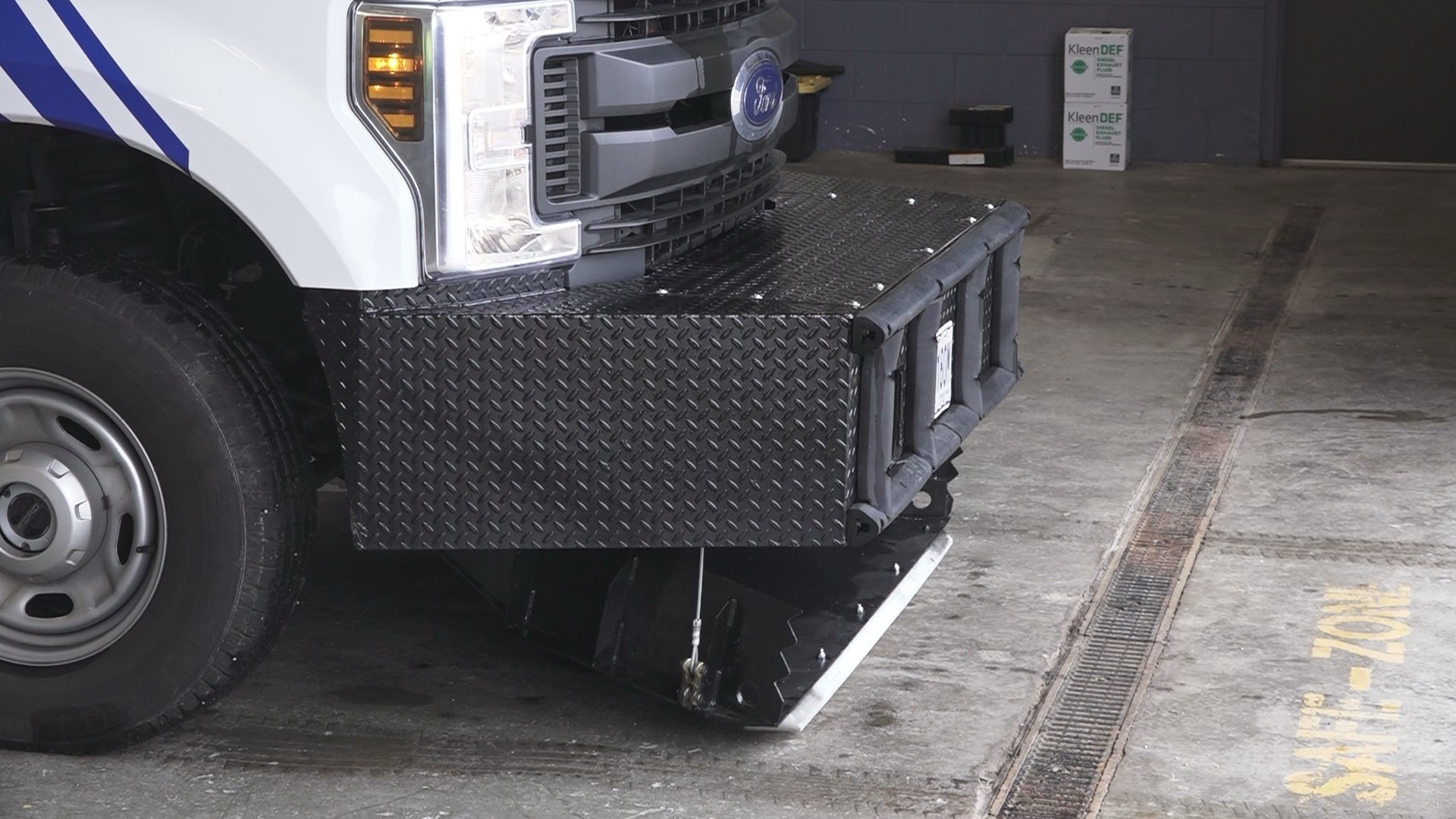
JAWS — Julie's Automated Waste-Removal System — was developed by Missouri DOT and named after Julie Love, an MoDOT employee struck and killed by a vehicle while removing road debris in 2004. The whole point of the technology is that workers don't have to enter the road.
— Origin of JAWS, Equipment World
Phase 1 introduces JAWS-equipped trucks to the TX H.E.R.O. fleet. The H.E.R.O. operator drives to the dispatched location and engages JAWS from inside the cab. The mechanism pushes the debris off the freeway and onto the shoulder of a feeder road, where textile-yard employees later collect it. Because JAWS handles all sizes through the same push mechanism, no triage layer is needed. The H.E.R.O. operator never has to leave the cab for debris work in Phase 1.
Proof of Removal
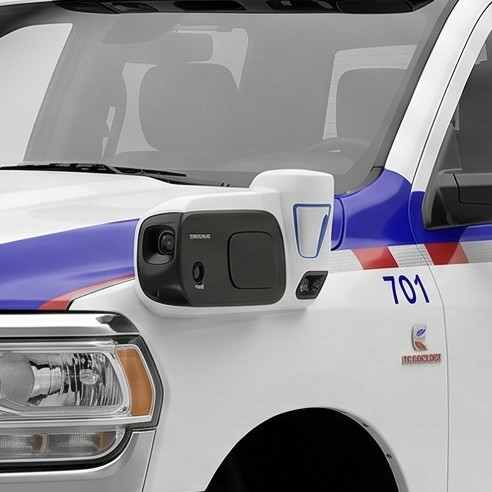
When a H.E.R.O. ends a dispatch, the system processes the dashcam footage and auto-clips a roughly 15-second segment showing the JAWS push, alongside the response time. Delivery is contextual: the result panel pops up at trip arrival, alongside the host nav app's normal arrival screen. If the user isn't driving, They receive a push notification — "Debris removed! View report at end of trip"
Original sprint research validated three possible incentives — Phase 1 ships only the strongest single one. The others remain available as future enhancements.
Phase 1.5 — API Scope Expansion
Once Phase 1 has validated the reporting → dispatch → warning → proof loop for debris, the same API extends to everything else H.E.R.O. crews respond to. Same plumbing, broader application, no new core architecture.
H.E.R.O. crews don't only clear debris — their primary work is clearing wrecked or disabled vehicles from travel lanes and providing traffic control at incident scenes; their secondary work is assisting stranded motorists. And nav apps already accept reports for most of these — Waze, Google Maps, and Apple Maps all support reporting accidents, hazards on shoulder, and stalled vehicles. The overlap defines Phase 1.5's scope:
In Phase 1.5 scope: Disabled / stalled vehicles. Accidents (minor). Lane-blocking hazards. Stranded motorist assistance.
Out of scope: Potholes (road maintenance, not response). Construction (planned, not incident). Weather hazards (no fixable agent). Police presence (not H.E.R.O.).
The driver experience for these other call types mirrors the debris flow exactly.
Phase 2 — Autonomous Debris Removal (Conceptual)
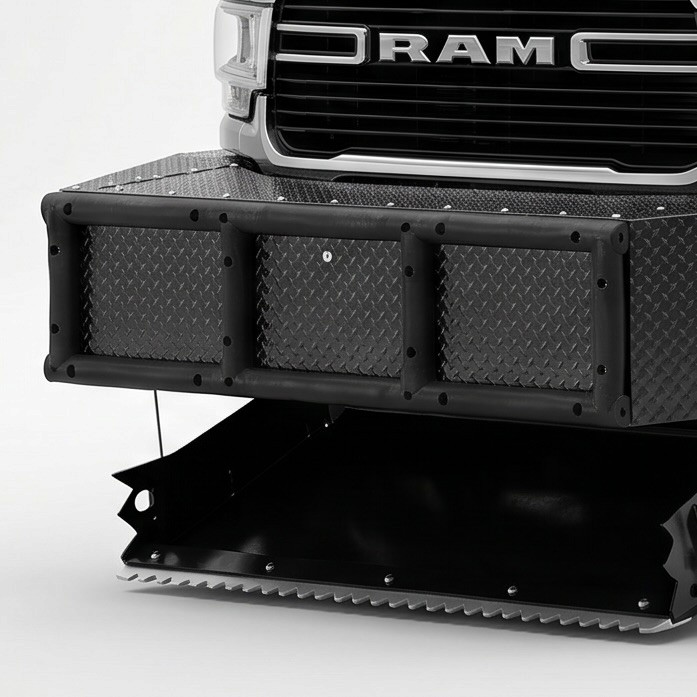
Phase 2 explores autonomy in two forms. They answer different parts of the worker-safety problem and require different technology. Both keep the JAWS mechanism and the Phase 1 dispatch / warning system. What changes is what's autonomous, and what role automation plays.
FULL AUTONOMY PROS
Eliminates worker exposure entirely
Increases capacity meaningfully (no fatigue, longer hours)
AI-driven patrol optimization on richer inputs
Generates richer telemetry for system improvement
FULL AUTONOMY CONS
Requires Waymo-class autonomy specialty-vehicle adapted
"AV becomes debris" failure mode is real and central
Heavier regulatory clearance
Higher cost, longer timeline, more partnership complexity
Public acceptance harder (survey
06 — THE EXPERIENCE
Final Prototypes & renders.
Phase 1 has three load-bearing driver flows: Report → Warn → See Proof. Each happens inside the nav app the driver already uses. Each extends a UX pattern those apps have already trained users on.
Flow A — Reporting debris
A driver is on I-35 between San Marcos and Austin. They see a tire in the right lane. They hit the existing debris-report button in their nav app — the same button they could already hit yesterday.
Flow B — Driver-warning
Twenty minutes later, a different driver is heading north on the same stretch. A H.E.R.O. JAWS truck has been dispatched and is now actively pushing the tire toward the feeder-road shoulder.
Flow C — Proof of removal
The original reporter is Arriving to their destination. The nav app's normal arrival screen appears — and sitting alongside it, a Road Gators result panel.
Phase 2 hero render


07 — FEASIBILITY & BUSINESS
A pilot, an insurance partnership, and three top risks.
Phase 1 is feasible across all five dimensions of the I&E feasibility framework — strong on market and technical, moderate on operational and legal, conditional on financial. The risk profile is bounded by partnership questions rather than technical ones.
Three business model paths
PATH A — MOST-SUPPORTED (49% YES)
Insurance Partnership
Insurance companies fund Road Gators in exchange for measurable reduction in debris-related collision claims. Survey-validated as the most-supported funding model. Highest sustainability potential. Hardest sell — requires actuarial validation that doesn't exist yet.
PATH B — MOST-ALIGNED
Public Funding (TxDOT)
Built as a TxDOT program leveraging the existing $50M/year cleanup budget. Most aligned mission-wise. Slowest sale, most political. Survey support: 34% Yes (split with 36% Maybe).
PATH C — DISTRIBUTION LAYER
Map Platform License
Mapping platforms pay for the integration; better debris data improves their routing product. Smallest direct value to platforms relative to their core business. Useful as supporting revenue, not a primary path.
Soft recommendation — phased rollout
Rather than picking a single path, the most credible Phase 1 launch is a sequence:
Pilot with TxDOT in one H.E.R.O. region. Mission-aligned, existing relationship, lowest activation friction. Pilot scope: one region, debris-only (Phase 1 not Phase 1.5), one platform partner — likely Waze given its existing community-reporting orientation.
Use pilot data to build the insurance case. Show measurable reduction in collision claims over 12–18 months. Approach the insurance industry from a position of evidence.
Layer insurance partnership for sustained funding. Once actuarial value is proven, insurance becomes the long-term funding base. TxDOT funding remains for operational continuity and rural expansion.
Treat platform integration as distribution, not revenue. Free-or-low-cost licensing in exchange for adoption is the realistic relationship.
Top three risks (of nine)
Capacity bottleneck. If Phase 1 succeeds at activating the 71% non-reporters, dispatch volume could spike and existing H.E.R.O. crew capacity becomes the constraint. Mitigation: phased rollout + GIS optimization + crew expansion within existing budget.
Platform partnership friction. Google / Apple / Waze may decline to integrate. Mitigation: launch with one initial partner, prove value, expand.
Insurance industry doesn't engage. The most-supported funding path only works if insurers come to the table. Mitigation: pilot data showing reduced collision claims is the leverage; without it, fall back to TxDOT funding.